
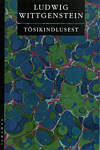
Ludwig Wittgenstein
Paperback | Pages: 160 pages Rating: 4.16 | 4148 Users | 115 Reviews

Mention Books Toward Tõsikindlusest
| Original Title: | Über Gewissheit |
| Edition Language: | Estonian |
Rendition In Pursuance Of Books Tõsikindlusest
Some interesting things that people are certain about:Religion
You have an invisible friend who is the most important being in the world and responsible for everything that happens.
Science
The great strength of science is that all its findings are provisional and subject to revision at any moment if new evidence comes in. This is why you should trust it.
Economics
Even 0.1% growth over a few tens of millenia would result in an economy bigger than the known universe. But, although it is impossible in the long term, the critical thing is that the economy should grow, otherwise catastrophe will ensue.
Love
Exercise left to the reader.
Details Appertaining To Books Tõsikindlusest
| Title | : | Tõsikindlusest |
| Author | : | Ludwig Wittgenstein |
| Book Format | : | Paperback |
| Book Edition | : | Avatud Eesti Raamat |
| Pages | : | Pages: 160 pages |
| Published | : | 2000 by Ilmamaa (first published 1969) |
| Categories | : | Philosophy. Nonfiction |
Rating Appertaining To Books Tõsikindlusest
Ratings: 4.16 From 4148 Users | 115 ReviewsCriticism Appertaining To Books Tõsikindlusest
Reading Ludwig Wittgenstein is a series of moments when one thinks of language and what it truly means. 'I think there is a tree' and 'there's a tree' is a vast difference, that can fit an entire universe. Or at the very least in the world of Wittgenstein. For me, I 'think' I understand Wittgenstein, but the lasting impression he has on me as a writer is to write as clearly as possible, but without surrendering the poetics in a specific description. For inspiration and getting my brain exercisedOn Certainty was not published until 1969, 18 years after Wittgensteins death and has only recently begun to draw serious attention. I cannot recall a single reference to it in all of Searle and one sees whole books on W with barely a mention. There are however xlnt books on it by Stroll, Svensson, McGinn and others and parts of many other books and articles, but hands down the best is that of Daniele Moyal-Sharrock (DMS) whose 2004 volume Understanding Wittgensteins On Certainty is mandatory
i couldn't decide whether this book is for humans or space aliens. i guess it's for both. wonderful wittgenstein. 90 excruciating pages (676 numbered sections) on whether G. E. Moore was justified in holding up his hand and saying, "I know that here is my hand." the second half is quite creepy to read, as he was dying of cancer while writing it. the dates are on the entries, with the final page written two days before he died. highlights:127 - how do i know that someone else uses the words "I
Über Gewissheit = On Certainty, Ludwig WittgensteinOn Certainty is a philosophical book composed from notes written by Ludwig Wittgenstein over four separate periods in the eighteen months before his death on 29 April 1951. He left his initial notes at the home of Elizabeth Anscombe, who linked them by theme with later passages in Wittgenstein's personal notebooks, compiled them into a German/English parallel text book published in 1969. The translators were Denis Paul and Anscombe herself. The
Wittgenstein is always worth reading.
At times tough, at times perplexing, at times dull. Its about language, not epistemology but kind of vague epistemic conjecture in undertones. Looks like a soliloquy but a wonderful little masterpiece.
Wittgenstein always fascinates me. He is not easy to read unless you are willing to go into his terrain of mind. He has a different mind from most of us, above, on a meta level of what we call "things in life". This book questions all the things we take for granted in order to live, to the extreme extent of almost being silly. After the questioning, there is not much left to maintain the human life. I wonder how many people can overcome that void.


0 Comments:
Post a Comment
Note: Only a member of this blog may post a comment.